
Methodist and Chapel History
Wymeswold was traditionally a village where chapel congregations were strong. There have been Baptists, Quakers, and Methodists in the village, each with its own place of worship.
There have also been smaller groups of Salvation Army members and Roman Catholics, who mostly worshipped outside the village. Each denomination has its own history.
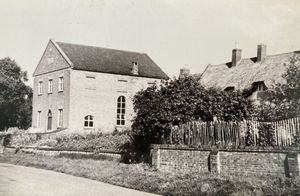
Timeline of Dissent and Non-Conformity in Wymeswold
1642-1660. English Civil War.
1647. Vicar Richard Palmer dismissed from Wymeswold. A succession of Protectorate-appointed ministers were present down to 1662.
1651. First evidence of Baptists in Wymeswold.
1661. Corporation Act and the 1673 Test Act, barred non-conformists from public office in towns and in the state.
1667. A Quaker community in Wymeswold is evidenced as part of an association centred at Broughton.
1662. Vicar Edward Hathaway, appointed 1658, conformed to the Restoration Oath of Obedience and Supremacy. 54 parishioners were presented for absenting themselves from Church, mostly Dissenters.
1677. George Fox, founder of the Quakers, visited Wymeswold.
1679-86. Wymeswold Quakers were severely persecuted by the local authorities.
1687. Declaration of Indulgence of James II. Permitted religious freedom of worship in England.
1689. Act of Toleration. Dissenting congregations could legally worship and build meeting houses or chapels.
1689 onwards. A Baptist public meeting place was founded at Wymeswold. In the 1700s ‘Anabaptists’ were meeting at a house on Brook Street.
1712. Wymeswold Baptists split into General Baptists and Particular Baptists.
1700s. Indemnity Acts relieved non-conformists of the provisions of the Test and Corporation Acts, so they could in practice hold office.
1750s. Wymeswold people attended Methodist preaching around Breedon on the Hill.
1760s. Wymeswold Quakers may have ceased meeting.
1771. First evidence for Wymeswold Wesleyan Methodist Society, part of the Loughborough circuit.
1781-2. A new General Baptist church – in association with East Leake – was founded and a chapel built in Wysall.
1791. Catholic Relief Act. Catholics permitted to practice their religion without penalties.
1801. Wesleyan Methodist chapel built on the Stockwell/Brook Street junction.
1806. General Baptist chapel established a Sunday School.
1811. Primitive Wesleyan association was formed.
1815. General Baptist chapel on Wysall Lane was enlarged.
1818. First Primitive Wesleyan meeting held in Wymeswold.
1827. Wesleyan Methodist chapel was enlarged.
1829. Repeal of the Test Act. Non-conformists could hold public office eg become MPs.
1829. Catholic Emancipation. Catholics were permitted to practice their faith publicly, build churches and hold public office.
1829-30. Primitive Methodist chapel built on London Lane.
1832. Reform Act. Non-conformists were allowed a greater range of civil and political rights.
1835. Wesleyan Methodists purchase an adjoining property to provide a vestry and other spaces.
1838. General Baptist chapel purchased a licence so it could celebrate weddings.
1845. New Wesleyan Methodist chapel was built. The old chapel became a school room.
1847. School rooms added to General Baptist chapel on Wysall Lane.
1860s. Primitive Methodist chapel was refurbished.
1866. General Baptist chapel erected a new gallery.
1877. Renovations to the General Baptist chapel, with new seating and roof repairs.
1879. Wymeswold Primitive Methodist chapel became part of the Sileby circuit.
1894. Primitive Methodist chapel was closed and sold.
1898. General Baptists of Wymeswold, Willoughby and Broughton were grouped under a single minister.
1911. Methodist chapel was extensively renovated.
1964. General Baptist chapel was sold and converted to a private house.
1975. Methodist church entered into the Three W’s association with Wysall and Willoughby.
1989. Primitive Methodist chapel was demolised.
1990-91. Methodist chapel was extensively refurbished.
