The page is currently in progress and will continue to be updated.
In 1186, during the reign of Henry II, the Abbot and Convent of Beauchief near Sheffield held the rectory of Wymeswold by gift of Robert Fitz-Radulph, confirmed by the Bishop of Lincoln, St Hugh of Avalon and by Pope Urban III, with the obligation to appoint a vicar to look after the church and parish.. Beauchief Abbey continued to appoint vicars down to the Dissolution of the monastery in 1537. Mostly, they appointed one of their own canons as vicar, who spent his time between Wymeswold and Beauchief. He was supported in his work in Wymeswold by chaplains, of whom we know little.
After the Dissolution of the monasteries, the rectory and advowson for Wymeswold were bestowed by the King on the Masters, Fellows and Scholars of Trinity College, Cambridge on 24th December 1546. Most of the time, they appointed one of their own graduates. Most were resident in the parish; a few were academics who worked in Cambridge. Many of the vicars appointed curates to support them in the work, and as with chaplains, we know little about these men. Most were in post for only a short period of time.
In 1837 the Leicester Archdeaconry was transferred from the Diocese of Lincoln to the Diocese of Peterborough. In 1927, the Archdeaconry of Leicester was made into a Bishopric, of Leicester. Trinity College, Cambridge, continued to appoint vicars into the 20th century,
The following pages contain a list vicars of Wymeswold, as far as we can reconstruct it from patchy records. Where information is available, there are also outline biographical details on the priests who served the parish and its church. We know almost nothing about the vicars of the middle ages. For the 20th century, the pages are still under construction.
Vicars presented by Beauchief Abbey and Instituted by the Bishop of Lincoln (1186 to 1537)
According to John Nichols, Thomas and John were employed as chaplains to serve Wymeswold, before the vicarage was established.
Date of appointment. Name of vicar.
Before 1220 John. c. 1220? Nicholas, a chaplain. ? Walter de Warwyk. 1287. Henry of Rotherham, canon of Beauchief. Died in post. 1302. John of Keworth, canon of Beauchief. Died in post. 1303. Richard of Derleye, canon of Beauchief. Resigned. 1340. John of Norton, canon of Beauchief. 1342. John of Notyngham, canon of Beauchief. Died in post, possibly in the Black Death of 1349. 1349. William of Mannsfield, canon of Beauchief, priest. He may have died in the Black Death epidemic of 1349. 1349. Alexander of Barlow, canon of Beauchief, priest. Resigned. 1356. Richard of Rempstone, canon of Beauchief, priest. Died in post. 1369. William of Wymundewald, canon of Beauchief, priest. Resigned. 1388. Robert of Barnburgh, brother of Beauchief, priest. Resigned. 1392. William of Wymundewold, canon of Beauchief, priest. Resigned. 1415. John of Sheffield, canon of Beauchief. 1437. John Stevyn, chaplain. Presented by the bishop.
c. 1462. John Downham, canon of Beauchief and abbot 1458-62. It is unknown whether Downham was a vicar or a resident priest. In 1458, John Downham was elected Abbot of Beauchief. In that year, he wrote to his superior, the Abbot of Welbeck (Notts) to ask advice about refusing to pay a duty owed to the mother house in France, which they had demanded of him. It was illegal to pay this duty in England. Within two years, the canons of Beauchief had plunged into disputes over Downham’s policies. Half of the canons sided with Downham over his militant policy, but the other half sided with the more obedient John Swyft. Swyft complained about Downham’s behaviour to the superior abbot of Welbeck, precipitating a Visitation (inspection) of Beauchief Abbey. At the end of February 1462, Abbot Downham was found guilty by the Visitors of perjury, incontinence, rebellion, and wasting the abbey’s resources. Instead of submitting to the discipline of the order, however, Downham and seven canons turned violent, and using swords and staves they fought their way out of the monastery. Downham failed to appear at a second meeting and was deposed as abbot, with all the rebels being excommunicated. Troubles continued for the next few months, but eventually the canons capitulated and returned to the abbey. John Downham must have capitulated at some point, for he seems to have retired to Wymeswold at about this time. He probably died in the parish and was buried in the church. Up until A.W. Pugin’s restoration there was a stained-glass panel in one of the church windows with the inscription (in Latin): Pray for the soul of John Downham, Abbot of Beauchief. He probably rests nearby.
1465. Stephen Power, canon of Beauchief. Died in post 1491. He was one of the canons who bought about the deposition of Abbot Downham.
1491. John Norton, canon of Beauchief, priest. Resigned, probably to take up the office of abbot.
1494. Richard Holingbrygge, canon of Welbeck. Around the year 1494, Brother Richard Holingbrygg of Beauchief’s sister house of Welbeck became vicar of Wymeswold. He seems to have had a troubled relationship with authority. In a Visitation of 1494, Brother Richard was ordered to ‘give manual obedience’ that is, take part in a ceremony of submission, to the Abbot of Beauchief, for being appointed to Wymeswold church. Brother Richard was also questioned about ‘incontinence, disobedience and slandering his own abbot’, which he denied. Things must have been patched up, however, because Holynbrygge was vicar until at least 1500, and his name appears in the Obituary of Beauchief Abbey, that is, the list of people who gave gifts to the monastery and who were prayed for, after their deaths. In this case, the annual remembrance was on 26th March, of Brother Richard and his sister Agnes.
? John Holte. Died in post.
c.1525. Leonard North, canon of Beauchief. Resigned 1561. North was a doctor of canon law. In 1537, Beauchief Abbey was dissolved by Henry VIII’s commissioners and Brother Leonard became a salaried secular priest under the authority of Trinity College, Cambridge. North remained in post into the reign of Elizabeth I, resigning in 1561 He died in Wymeswold and was buried in the church.
Vicars presented by Trinity College, Cambridge and instituted by the Bishop of Lincoln (1546 to 1837, except 1642 to 1660 the years of the Civil Wars and Republic)
1561. Thomas Woodcocke. Died in post 1564. He was unmarried. In his will, he left gifts to his godchildren, with the majority going to two of them, and he left £7 for the maintenance of ‘the little girl or wench’ in Chesterfield. He was buried in Wymeswold churchyard.
1564. William Thorpe. He was the first vicar to be married, and wed Margaret Johnson in Wymeswold Church in 1568.
1566. Nicholas Brown MA.
1572. William Gibson.
1574. Peter Rathbone (born c.1546). Died in post 1619. He was ordained in April 1568. The Visitation register comments ‘no graduate, no preacher’ although he attended university, presumably leaving without a degree. The Liber cleri of 1576 notes that his income was £9 a year at Wymeswold, that he was 30 years of age and married, ‘indifferently learned in the Scripture and the Latin tongue.’ In 1584, he is noted as ‘scholaris’. He was present when many wills were made by his parishioners and he kept the first detailed parish registers. He died in Wymeswold and made a will with a strongly Protestant preamble. He was buried in Wymeswold church. He made a series of bequests to his two surviving children, son and daughter, their children and his godchildren.
1619. Nicholas Fisher, MA. Died in post 1637. He was ordained deacon and priest in October and November 1596, respectively. In 1601, he was appointed rector or perpetual vicar of Lowesby, Leicestershire and resigned in 1604; in 1604 he was instituted as vicar as Scraptoft and in 1610 was licensed as a preacher. In 1618 he was instituted as vicar at Wymeswold where he stayed until his death in 1637. His will and probate inventory survive. He had a wife and four surviving children, two sons and two daughters, with grandchildren. He left his daughter Rachel his Bible. His library was worth £7.
1637. George Chamberlain, MA. He was instituted as perpetual vicar of Wymeswold.
1638. Richard Palmer, MA. Instituted as vicar of Wymeswold in December 1538. He was ejected from his living in 1647 by Leicestershire’s Parliamentary Committee. Palmer seems to have been a conscientious parson but a prickly neighbour. In a church court case, Elena Mason, servant, described Palmer as a man ‘diligent and painfull’ in his calling, but ‘some what troblesome’. By 1639, Palmer had only been in his living for two years but had already commenced two defamation cases again parishioners. In one case, Palmer and other associates denounced Joseph Wingfield for verbally abusing local clergy. Although Wingfield supplied horses for the King’s campaign against the Scots, he had been overheard blaming church ceremonies for provoking the conflict, and denigrating bishops.
In 1641, Palmer lost a Leicestershire Archdeaconry Court brought by Anna Pywell, his churchwarden’s wife, who was Wingfield’s sister. This case originated in an action, brought by Palmer himself, for defamation, following a late-night altercation. In November 1638, Palmer and some friends, including another minister, Theophilus Rusted, went to Robert Pywell’s house ‘to be merrie togither’. Robert Pywell himself was not there; his wife was perhaps running an informal alehouse. At 11p.m., she attempted to get Palmer to go home and, when he resisted, called him a ‘knave’. Several witnesses heard how he responded. According to Rusted, Palmer, ‘stampinge with his foote one the ground’, replied: I tell thee I am in holy orders and doest thow call me K: thow arrant arrant arrant brazen faced whore. K… the Towne and Country knoweth what thow art … Palmer then claimed to have seen ‘one … hold his hand upon ... Ann Pywells Comodyty for .... halfe an howre togeather’ and that she ‘should heare the next saboth daye in his sermon what she ... was’. In response Anna Pywell apparently made the remark that roused Palmer to litigation, retorting that if she was a whore she was Palmer’s whore, for he had attempted her honesty more than any man. Perhaps regretting his decision to prosecute, Palmer attempted to settle with the Pywells in September 1640 with a drink and a pledge, even getting his wife to invite Anna Pywell to hear some music on the virginalls. But despite intercessions of an older minister Edward Blount on Palmer’s behalf, in 1641 the Pywells brought a retaliatory action against Palmer, which he lost.
In 1646, these events were revisited. Palmer was denounced before the Leicestershire committee for ‘attempting the chastity’ of a woman. No testimony was ever presented to suggest how, and in what context, Palmer had attempted Anna Pywell’s chastity, beyond her own unsubstantiated remarks that he did so; no more serious behaviour was described to the original court than that of shouting sexual abuse at a parishioner. Palmer was also fond of hunting, and this formed part of the case against his moral character; his accusers complained that ‘in such like pastymes [he] exercises himselfe twice or thrice every weeke.’
Palmer was ejected from the vicarage early in 1647 and went to live in Burton on the Wolds. He died there in 1651 and was buried in Prestwold churchyard.
1648. Robert Blunt. The survey of 1650 returns this 'minister' as 'weak'.
1653. James Brecknock. Described as ‘vicar’ of Wymeswold and elected ‘Register’ by the parishioners and sworn in before Justice Danvers.
1656. Savell Bradshaw.
1657. John Seymour.
1658; 1663. Edward Hathaway, MA. Resigned 1680. Hathaway was ordained priest and deacon in 1642. He was appointed to Wymeswold initially in 1658. After the Restoration, he was appointed schoolmaster of Osgathorpe and confirmed as vicar of Wymeswold in August 1662, as well as preacher in the Archdeaconry of Leicester. He was re-instituted in 1663 after taking the Oath of Supremacy. He retired from Wymeswold in 1680 and went to Osgathorpe, where he died and was buried in April 1681. His probate inventory survives in which £3 worth of books were listed.
1681. John Orme, MA. Died in post 1701. Ordained deacon in 1675 and priest in 1676, to the title of curate of Coleorton, Leicestershire. In July 1681 he was instituted as vicar of Wymeswold and licensed as a preacher. He married Ann Bainbrigg (relative of Katherine Bainbrigg, wife of Judge William Leake) of Lockington in 1687He died in post 1700 aged 46 and was buried under a stone in the chance (recorded by Nichols). His probate inventory survives.
1692. William Walker, BA, curate? Ordained deacon 1692 and licenced as a preacher for Wymeswold.
1701. Edward Moises, MA. Resigned 1728. In 1701, he was ordained as deacon then priest to the living of vicar of Wymeswold. In 1713, he was instituted as curate of Kingston-on-Soar and vicar of Wysall, Notts., which he held with Wymeswold. He resigned as vicar of Wymeswold in 1728 and was instituted as rector of Keyworth in the same year. He died in 1751 and was buried in Keyworth church.
1728.Thomas Green, MA. Died in post. He was originally from Westmorland and went to school at Heversham. Green was admitted in 1722 to Trinity College, Cambridge, aged 19. He achieved his BA degree in 1725-26 and MA in 1729. He was ordained deacon in 1726, and instituted as vicar of Wymeswold in 1728, while still studying for his MA. In 1758 he was appointed chaplain to the Bishop of Bristol for a few months, then vicar of Walton on the Wolds, holding this in plurality with Wymeswold. Green remained in post until his death in 1776.
In 1734, the vicarage was augmented with £200 from Queen Anne’s bounty. Green also obtained £50 out of some money left by Rev Carter late rector of Wilford in Notts for charitable uses, £50 from Trinity College, and donations from the clergy and gentlemen of the neighbourhood. Green used this money to purchase an estate at Gaddesby, consisting of ‘an enclosure containing 12 acres called Dale-Hill, another enclosure of 12 acres called Swines Dale-Hole and also 5 acres of meadow ground in the eastern part of the meadow called Mouldy-Bank-Meadow.’ The rental of this estate was used to supplement the vicar’s salary in Wymeswold for over 100 years.
1760. Thomas Green junior, MA, curate. Green was a son of the Rev Thomas Green of Wymeswold and went to school at Loughborough. He was admitted to Trinity College, Cambridge, aged 18. He achieved his BA in 1760 and MA in 1763. In 1760, he was ordained deacon to serve Wymeswold and licensed as curate. In 1762 he was ordained priest for Wymeswold. In 1778, he became Woodwardian Professor of Geology until 1788, when he died aged 51 in Cambridge.
1764 William Kirby, SCL, LLB, curate.He was born at Bingham, Notts and was the son of the Rev Richard Kirby, rector of Gedling, Notts. He was admitted in 1760 aged 19 to Emmanuel College, Cambridge. He achieved LLB in 1764. Kirby was ordained deacon and licensed as curate for Wymeswold in 1764, and ordained priest in 1766. He went on to be a curate at Gonalston, vicar at Burton Joyce and rector at Screiton, all in Notts. He died in 1782.
1766. William Forster, MA, curate. He was son of Thomas Forster, druggist of Rutland. He was born and attended school in Uppingham. Forster was admitted aged 18 to St John’s College, Cambridge, in 1761. He achieved BA in 1765 and MA in 1781. Forster was ordained deacon in 1766 and priest in 1769. He was licensed as a curate of Wymeswold in 1766. He went on to be rector of Ayston in 1780 to 1834, when he died.
1774. Thomas Sisson, no degree, curate. Sisson was ordained deacon in 1774 and priest in 1776. He was licensed as curate of Wymeswold in 1774 with a stipend of £30. He went on to be curate of Desborough, Northants, then schoolmaster of Reigate Free School. He died in 1814.
1776. Abraham Jobson (non-resident). Resigned 1802. He was the son of Jonathan Jobson of Bowling, near Bradford, W. Yorks. He was admitted to Magdalen College, Cambridge, in 1768, and moved to Trinity College in 1769 where he was fellow 1773-76. Jobson was ordained deacon and priest in 1772. He was curate at Doddington, Cambs, then headmaster of March grammar school. In 1776 he was instituted as vicar of Wymeswold. At the same time, he was rector of Wardley with Belton in Rutland. In 180s he resigned both livings and was appointed to St Peter’s Wisbech in Cambs, where he died in 1831.
1776. Joseph Dawson, curate to 1793.
1797. Thomas Whiteman, curate to 1812. He was ordained deacon in 1787 and became curate of Leasham, York, then Stoke, Lincs. He became curate of Wymeswold in 1797 with a stipend of £30.
1802. John Sheepshanks (non-resident), MA. He was the son of Richard Sheepshanks on Linton, Yorks, born in 1765 and attended school at Leeds. Sheepshanks was admitted to Trinity College, Cambridge in 1782. He gained his BA in 1787 and MA in 1790, being a fellow in 1789 and a tutor in 1799. He was ordained deacon in 1787 to be curate of Ovington, Norfolk, he was ordained priest in 1793 and became perpetual curate of Holy Trinity, Leeds in 1801. He was appointed vicar of Wymeswold in 1801 until his resignation in 1825. From 1824, he was priest in Cornwall, where he died in 1844.
1813. Benjamin Maddock, curate to 1826. He was the son of Henry Maddock of King’s Cliffe, Northants, and went to school at Repton. He was admitted to Magdalene College, Cambridge, in 1806, then moved to Corpus Christi. He gained his BA in 1810 and MA in 1814. Maddock was ordained deacon in 1810 and priest in 1811. In 1810, he became curate of Twyford, Leics, and in 1814, curate of Wymeswold, also serving Prestwold with Hoton. He was paid a stipend of £50 and given the use of a house. In 1826 he became perpetual curate at Holy Trinity, Huddersfield and then vicar of Tadcaster. He died in 1871 at Leamington, aged 90.
1825. William Clerk (non-resident), MA. Resigned 1826. He was born in 1788, the second son of John Clerk MD of Newcastle-upon-Tyne and went to school at Welton, Yorks. He was admitted to Trinity College, Cambridge, in 1803. He became a BA in 1808, MA in 1811, M.L in 1813, M.D, in 1827, a fellow in 1809 and Professor of Anatomy 1817-66. Clerk studied medicine in London for F.R.C.P. in 1830 and F.R.S. in 1836. He was ordained deacon and priest in 1818. He was appointed vicar of Wymeswold 1825-26, then rector of Guiseley, Yorks. Clerk was non-resident at Wymeswold except for about three months, but selected a good curate, restored the church and rectory and built new schools. He was a distinguished anatomist and friend of Lord Byron. He died in 1869 at Cambridge.
1826. George Peacock, DD. Resigned 1835. He was son of the Rev Thomas Peacock, perpetual curate at Denton, near Darlington. He was born in 1792 and attended schools at Sedbergh and Richmond. Peacock was admitted to Trinity College, Cambridge, in 1809. He obtained a BA in 1813, a MA in 1816, and a DD in 1839. He was fellow in 1814 and tutor in 1823-39. He was ordained priest in 1822. He was instituted as vicar of Wymeswold in 1826 and resigned in 1835. He became Lowndean Professor of Astronomy and Geometry 1837-58 and Dean of Ely Cathedral 1839-58. He died in 1858, in London.
1826. William M. Farish, curate to 1835. He was admitted to Corpus Christi, Cambridge, in 1821. He came from Cambridgeshire. He gained a BA in 1826 and MA in 1829. He was ordained deacon and licensed as curate for Wymeswold in 1826, then ordained priest in 1827. His stipend was £85 and the use of a house. In 1837 he became perpetual curate at St Peter’s, Preston, Lancs. He died in 1863, aged 60.
The Rev Henry Alford
1835. Henry Alford, DD. Resigned 1853. He was son of Henry Alford, rector of Ampton, Suffolk. He was born in London in 1810, but his family were from near Taunton. He attended Ilminster Grammar School. Alford was admitted to Trinity College, Cambridge, in 1827. He gained his BA in 1832, his MA in 1835 and a DD in 1859. He was Fellow in 1834 and Hulsean Lecturer 1841-43. He was ordained deacon in 1833 and priest in 1834. Alford was curate to his father at Ampton in 1833, then appointed vicar of Wymeswold in 1835. He was responsible for the major restoration of the church in 1844-46 by A.W.N. Pugin, and the rebuilding of the school and vicarage. He resigned in 1853. He then became Minister of Quebec Chapel, Marylebone, 1853-7 and Dean of Canterbury 1857-71. He married Frances Oke his cousin, with whom he had four children (the two young sons Clement and Ambrose are buried in Wymeswold churchyard). He edited the Greek Testament, 1849-61. He undertook other biblical works and commenced a Commentary on the Old Testament. He was editor of Dearden's Magazine, and the first editor of the Contemporary Review. He was one of the revisers of the New Testament. He was a prolific writer and publisher and a man of varied accomplishments: poet, musician, artist and composer. He wrote the well-known Harvest Hymn, "Come ye thankful people, come", and the Baptismal Hymn, "In token that thou shalt not fear”. For a list of his works and a full biography, see Frances Alford, The Life of Dean Alford (1872). He died in 1871.
Vicars presented by Trinity College, Cambridge and instituted by the Bishop of Peterborough (1837 to 1927)
1853. R.P. Mate, M.A.
1856. J.F. Bateman, curate to ?
The Rev Robert Walker
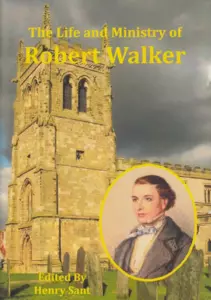
1856. Robert Walker, MA. Died in post 1883. Walker was born in 1825 at Gestingthorpe, Essex, where his father was the squire. He was educated at home by his father then went to Trinity College, Cambridge. Here, he distinguished himself as a mathematician, achieved a prize and a degree, and became a fellow of Trinity College. After being ordained, Walker was appointed to a small living in Suffolk, then in 1856 he was appointed to Wymeswold. He worked hard at good relations with the many Dissenting congregations in the village, for example a joint Sunday School centenary in 1880 and a joint Burial Board to develop a new cemetery on Rempstone Road, which opened in 1882. He was married with six children. He died suddenly in January 1883 aged 58 and was buried in the new cemetery. A brief 'Memorial of the Spiritual Life and Ministry of the late Rev. Robert Walker' was published in 1883, with extracts from his works. Walker left a relatively large corpus of published writings, including sermons and a series of annual addresses to his parishioners. These are published along with the 'Memorial' in the volume shown in the image (in 2011).
1883. Robert Charles Green, MA. Retired 1914. Green was born in 1834 in Ashby de la Zouch, Leics. He was younger son of Edward Mortimer Green of Charnwood Lodge, Leics. He was educated at Harrow, then Trinity College Cambridge, where he was fellow in 1858. In 1861 he took holy orders and was curate of St Peter’s, Belper, Derbyshire 1861-4, then rector of Loughton, Bucks, for twenty years, where his children were born; he had three children who survived him. Green was appointed to Wymeswold in 1883. He continued in post until 1914, when he retired to Loughborough. He died in 1919 aged 85 and was buried in Wymeswold. He left an estate worth £5633 11s 4d.
Green sold the Wysall road vicarage land to Trinity College. He invested the proceeds of the sale in Metropolitan Stock, which yielded £45 annually.
1914. Claud Henry Edmunds, MA. Resigned 1923. Edmunds was born in 1881 in Halifax, Yorks, with a twin sister, Dorothy. He was educated at Westminster School and Trinity College, Cambridge. He obtained BA in 1902 and MA in 1906. He was ordained deacon in 1904 and priest in 1905. He was curate of St. Paul, Peel, Lancs, 1904-7; S. P. G. Missionary at Cawnpore, India, 1907-10; Curate at the Church of the Ascension, Ealham Hill, Surrey, 1901-2, and at Christ Church, Streatham, 1912-4. He married Helena Pagdon in 1910 in Colombo, Ceylon (now Sri Lanka) and they had three daughters. Claud’s father was Henry Edmunds, pioneering electrical engineer and motorist; he introduced Edison’s phonograph and lightbulb to England in 1904 and arranged the first meeting between Charles Rolls and Henry Royce. In 1923 Edmunds went on to a parish in Leicester and then to Hemel Hempstead. He retired in 1947. He died in 1969, in Somerset. He was the author of The Prayer Book in the Inner Chamber (1920), The Message of the Scriptures (1961).
1923. A.W. Smyth.
1925. Le Gendre Claude Bourchier, BA. Bourchier was born in 1887 in Berrow, Somerset. His father was Capt. C.L.J. Bourchier of the 35th and 65th regiments and Cape Colonial Forces. Bourchier was curate in Hornsey in 1910 and a chaplain in the army 1914-22. He was an assistant priest in Dewsbury in the 1921 census. He married Lucy Hare of Hornsey, a doctor’s daughter, in 1911, and they had two children. He died in 1944, in Bingham, Notts.
Institution by the Bishop of Leicester (1927 to present)
1938. Patrick Roger-Harvey.
1946. Charles George Powell.
1955. Lawrence Jackson.
1959. Samuel Bertram Bennett.
1965. Christopher Maurice Hubbard.
1973. Joseph Oliver Smart.
1976. John Castle.
1976. Douglas William Pharaoh.
1980. Kenneth William Farmer.
1986. Leslie Robinson.
1997. Jeffrey Stewart Hopewell, Priest in Charge. Resigned.